What situation does Ephesians address, and what is debated about its setting or authorship?
The breadth of the address makes it difficult to know whether the work began as a letter to one city or circulated more widely.
Acts 27:13-28:10 · Acts 28:11-15 · Acts 28:16-31 · Col 4:7-18; Philemon 10-24 · Eph 1-6; 3:1; 6:20-21 · Phil 1:12-26; 2:5-30; 4:10-20
What remains uncertain
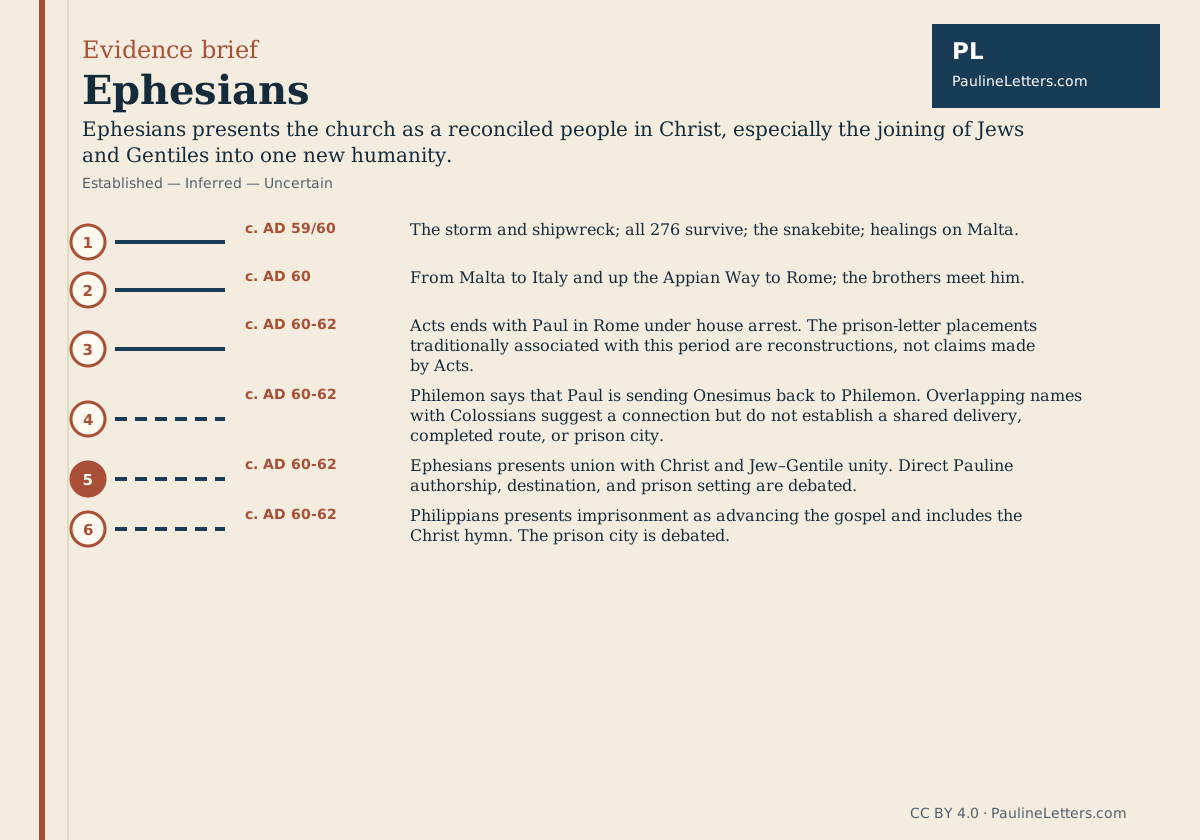
The traditional reconstruction shown here places Ephesians in Rome around AD 60–62 and compares it with Acts’ Roman house arrest.
Rome, Caesarea, and Ephesus have all been proposed, and the destination “in Ephesus” is itself textually uncertain in some early witnesses.
Ephesians belongs to the traditional Pauline corpus, but its authorship is substantially disputed because of vocabulary, style, and its developed presentation of the church. Proposals range from Paul in Roman custody to a close Pauline associate writing in his name or tradition.
Composition by a Pauline associate: Many scholars attribute Ephesians to a close Pauline associate who extends and develops themes found in the undisputed letters. The letter is read as a later work in Pauline tradition rather than a direct letter from Paul.
A circular destination: The absence of “in Ephesus” from some early witnesses supports reading Ephesians as a circular letter for several communities. Ephesus remains an important association, but not necessarily the sole original destination.
Sources: An Introduction to the New Testament · The Pauline letters · The Acts of the Apostles · Pauline Letters chronology · Paul: A Critical Life
Sources
Acts 27:13-28:10 · Acts 28:11-15 · Acts 28:16-31 · Col 4:7-18; Philemon 10-24 · Eph 1-6; 3:1; 6:20-21 · Phil 1:12-26; 2:5-30; 4:10-20
- An Introduction to the New Testament
Raymond E. Brown, An Introduction to the New Testament (Doubleday, 1997). Chapter 28, “Epistle (Letter) to the Ephesians,” “General Analysis of the Message”; Chapter 28, “Epistle (Letter) to the Ephesians,” “To Whom and By Whom?”
- The Pauline letters
Romans through Philemon, World English Bible (public domain).
- The Acts of the Apostles
Acts 7–28, World English Bible (public domain).
- Pauline Letters chronology
The project’s 67-row chronology, cross-referencing Acts and the letters and labeling debated dates.
- Paul: A Critical Life
Jerome Murphy-O’Connor, Paul: A Critical Life (Oxford University Press, 1996). Chapter 1, “The Chronological Framework,” “The Evidence from the Pauline Letters” and “The Evidence from the Acts of the Apostles”
Explore next
Encounter Christ through Scripture, history, and thoughtful learning.
Enter the story