What situation does Colossians address, and what is debated about its setting or authorship?
The precise teaching opposed in the letter cannot be reconstructed confidently from the letter’s one-sided description.
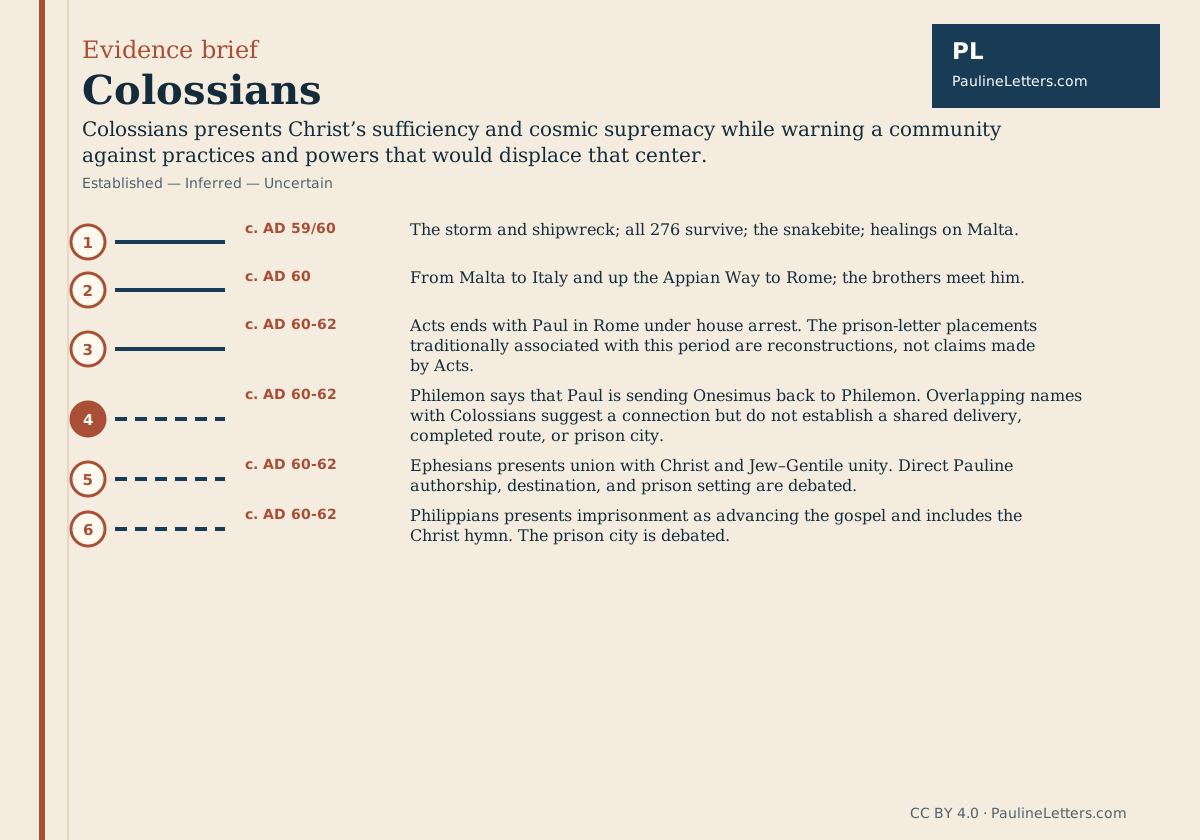
Acts 27:13-28:10 · Acts 28:11-15 · Acts 28:16-31 · Col 4:7-18; Philemon 10-24 · Eph 1-6; 3:1; 6:20-21 · Phil 1:12-26; 2:5-30; 4:10-20
What remains uncertain
Rome around AD 60–62 is the traditional prison chronology shown here, often linked with Philemon and the closing network of Tychicus and Onesimus.
Brown’s Roman range is AD 61–63; Ephesus and Caesarea remain possible imprisonment settings, and direct Pauline authorship is debated.
Colossians is part of the traditional Pauline corpus, but some scholars dispute direct Pauline authorship because of style and theological emphasis. Others judge the differences consistent with a new situation, collaborators, or a secretary.
Composition by a Pauline associate: Some scholars attribute Colossians to a close Pauline associate drawing on Paul’s thought and network. The relation to Paul’s own activity changes, while the letter’s witness to its Colossian network remains.
A different prison setting: Whether directly Pauline or not, the custody setting may be placed at Ephesus or Caesarea rather than Rome. The date and travel distances change without deciding the separate authorship question.
Sources: An Introduction to the New Testament · The Pauline letters · The Acts of the Apostles · Pauline Letters chronology · Paul: A Critical Life
Sources
Acts 27:13-28:10 · Acts 28:11-15 · Acts 28:16-31 · Col 4:7-18; Philemon 10-24 · Eph 1-6; 3:1; 6:20-21 · Phil 1:12-26; 2:5-30; 4:10-20
- An Introduction to the New Testament
Raymond E. Brown, An Introduction to the New Testament (Doubleday, 1997). Chapter 27, “Letter to the Colossians,” “General Analysis of the Message”; Chapter 27, “Letter to the Colossians,” “From Where and When?”; Chapter 27, “Letter to the Colossians,” “The Background”; Chapter 27, “Letter to the Colossians,” “Did Paul Write Colossians?”
- The Pauline letters
Romans through Philemon, World English Bible (public domain).
- The Acts of the Apostles
Acts 7–28, World English Bible (public domain).
- Pauline Letters chronology
The project’s 67-row chronology, cross-referencing Acts and the letters and labeling debated dates.
- Paul: A Critical Life
Jerome Murphy-O’Connor, Paul: A Critical Life (Oxford University Press, 1996). Chapter 1, “The Chronological Framework,” “The Evidence from the Pauline Letters” and “The Evidence from the Acts of the Apostles”
Explore next
Encounter Christ through Scripture, history, and thoughtful learning.
Enter the story