Why did Paul write Romans, and what is debated about its setting or authorship?
The letter names its plans, but it does not print a calendar date or identify a courier with certainty.
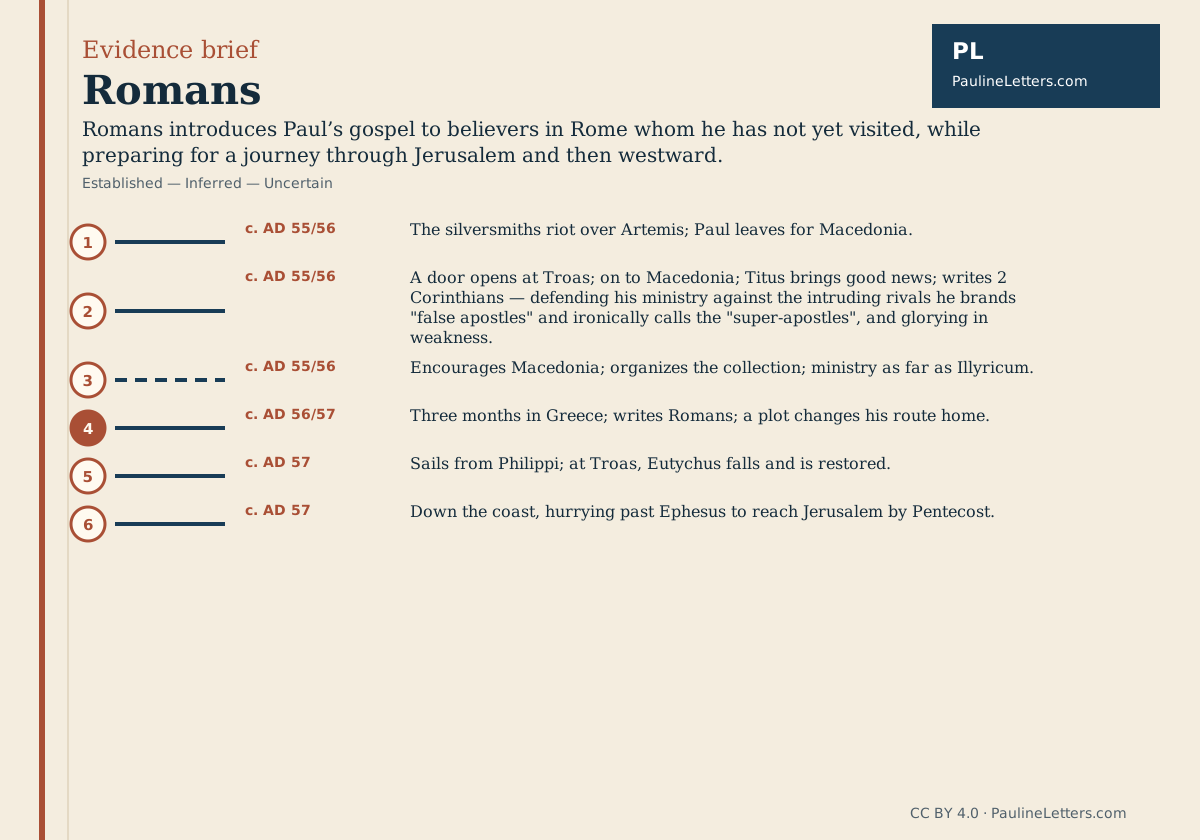
Acts 19:21-41; 20:1 · Acts 20:1-2; 2 Cor 2:12-13; 7:5-7; 11:5, 13; 12:7-11 · Acts 20:1-2; Rom 15:19; 2 Cor 8-9 · Acts 20:2-3; Rom 15:22-29; 16:1-2 · Acts 20:5-12 · Acts 20:13-16
What remains uncertain
In the Pauline Letters chronology, Corinth around AD 56–57 is the leading reconstruction, near the close of Paul’s Aegean work.
The letter does not state its writing city. Brown’s comparison of chronology systems places the same Corinthian setting slightly earlier or later; nearby Cenchreae enters the evidence through Phoebe and is not independently identified as the place of composition.
Romans is widely regarded as an undisputed letter of Paul. Its travel plans and greeting network make Corinth around AD 56–57 the leading reconstruction. Nearby Cenchreae enters the evidence through Phoebe; the letter does not independently identify it as the place of composition. Tertius names himself as the amanuensis who wrote down the letter and added his own greeting.
A nearby point in the same journey: Some reconstructions place Romans slightly earlier or later within Paul’s Corinthian stay while retaining the pre-Jerusalem setting. The precise year shifts, but the letter still belongs before the Jerusalem journey rather than after Roman imprisonment.
Sources: An Introduction to the New Testament · The Pauline letters · The Acts of the Apostles · Pauline Letters chronology · Paul: A Critical Life
Sources
Acts 19:21-41; 20:1 · Acts 20:1-2; 2 Cor 2:12-13; 7:5-7; 11:5, 13; 12:7-11 · Acts 20:1-2; Rom 15:19; 2 Cor 8-9 · Acts 20:2-3; Rom 15:22-29; 16:1-2 · Acts 20:5-12 · Acts 20:13-16
- An Introduction to the New Testament
Raymond E. Brown, An Introduction to the New Testament (Doubleday, 1997). Chapter 24, “Letter to the Romans,” “General Analysis of the Message”; Chapter 24, “Letter to the Romans,” “Summary of Basic Information”: “DATE” and “AUTHENTICITY”
- The Pauline letters
Romans through Philemon, World English Bible (public domain).
- The Acts of the Apostles
Acts 7–28, World English Bible (public domain).
- Pauline Letters chronology
The project’s 67-row chronology, cross-referencing Acts and the letters and labeling debated dates.
- Paul: A Critical Life
Jerome Murphy-O’Connor, Paul: A Critical Life (Oxford University Press, 1996). Chapter 1, “The Chronological Framework,” “The Evidence from the Pauline Letters” and “The Evidence from the Acts of the Apostles”
Explore next
Encounter Christ through Scripture, history, and thoughtful learning.
Enter the story