Why did Paul write 2 Corinthians, and what is debated about its setting or authorship?
The letter gives strong internal evidence for a strained relationship, but the full sequence of visits and lost letters is not preserved.
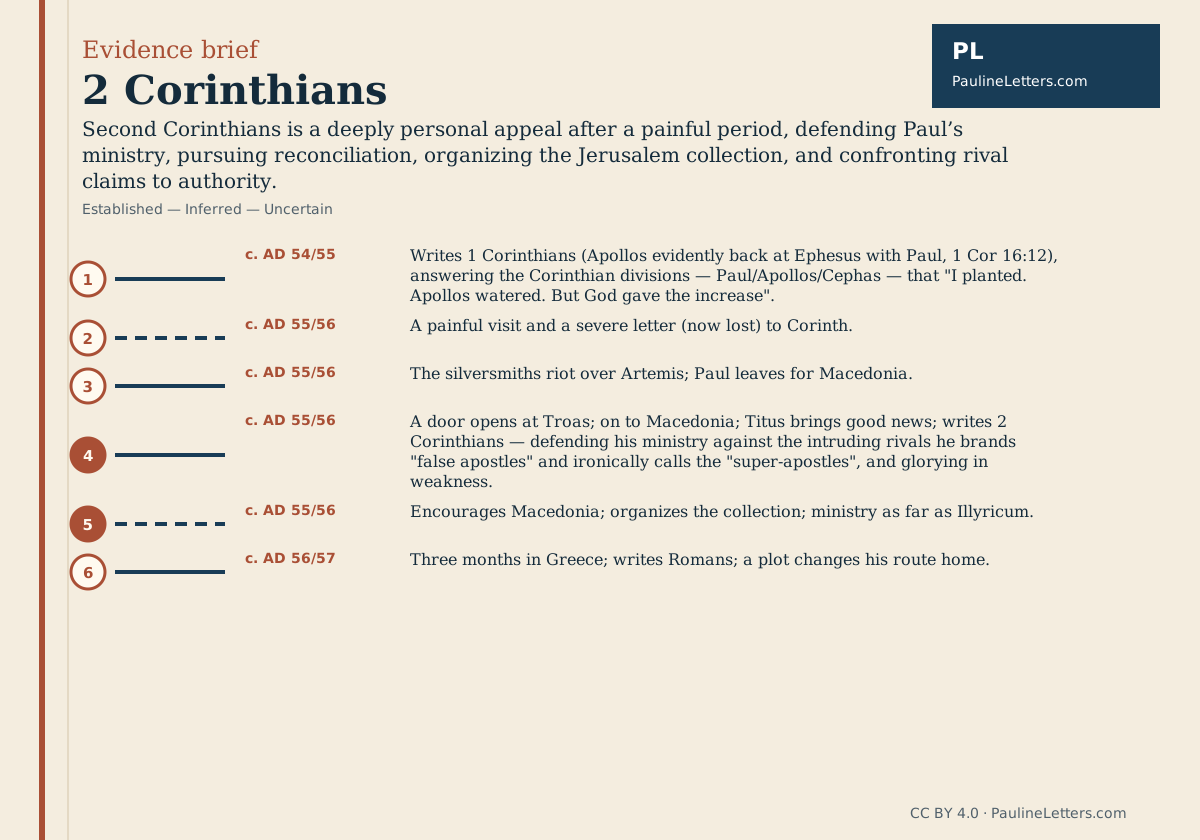
1 Cor 1:11-12; 3:6; 16:8-12 · 2 Cor 2:1-4; 7:8-12 · Acts 19:21-41; 20:1 · Acts 20:1-2; 2 Cor 2:12-13; 7:5-7; 11:5, 13; 12:7-11 · Acts 20:1-2; Rom 15:19; 2 Cor 8-9 · Acts 20:2-3; Rom 15:22-29; 16:1-2
What remains uncertain
The Pauline Letters chronology places the letter in Macedonia around AD 55–56, after Paul left Ephesus and before his later stay in Greece.
Macedonia is a region, not a securely named city of composition; another major chronology places the same Macedonian setting in AD 57.
2 Corinthians is widely regarded as Pauline, though many interpreters think its present form may preserve more than one stage of correspondence. It is commonly placed in Macedonia around AD 55–56.
One letter or several stages: Some scholars read the canonical form as a unified composition; others think it preserves more than one stage of Paul’s correspondence with Corinth. The main Macedonian setting can remain plausible, but the order and tone of individual sections are read differently.
Sources: An Introduction to the New Testament · The Pauline letters · The Acts of the Apostles · Pauline Letters chronology · Paul: A Critical Life
Sources
1 Cor 1:11-12; 3:6; 16:8-12 · 2 Cor 2:1-4; 7:8-12 · Acts 19:21-41; 20:1 · Acts 20:1-2; 2 Cor 2:12-13; 7:5-7; 11:5, 13; 12:7-11 · Acts 20:1-2; Rom 15:19; 2 Cor 8-9 · Acts 20:2-3; Rom 15:22-29; 16:1-2
- An Introduction to the New Testament
Raymond E. Brown, An Introduction to the New Testament (Doubleday, 1997). Chapter 23, “Second Letter to the Corinthians,” “General Analysis of the Message”; Chapter 23, “Second Letter to the Corinthians,” “Summary of Basic Information”: “DATE” and “AUTHENTICITY”; Chapter 23, “Second Letter to the Corinthians,” “One Letter or a Compilation of Several Letters?”
- The Pauline letters
Romans through Philemon, World English Bible (public domain).
- The Acts of the Apostles
Acts 7–28, World English Bible (public domain).
- Pauline Letters chronology
The project’s 67-row chronology, cross-referencing Acts and the letters and labeling debated dates.
- Paul: A Critical Life
Jerome Murphy-O’Connor, Paul: A Critical Life (Oxford University Press, 1996). Chapter 1, “The Chronological Framework,” “The Evidence from the Pauline Letters” and “The Evidence from the Acts of the Apostles”
Explore next
Encounter Christ through Scripture, history, and thoughtful learning.
Enter the story