What situation does 2 Timothy address, and what is debated about its setting or authorship?
Whether the letter comes directly from Paul, preserves authentic memories, or was composed later remains disputed.
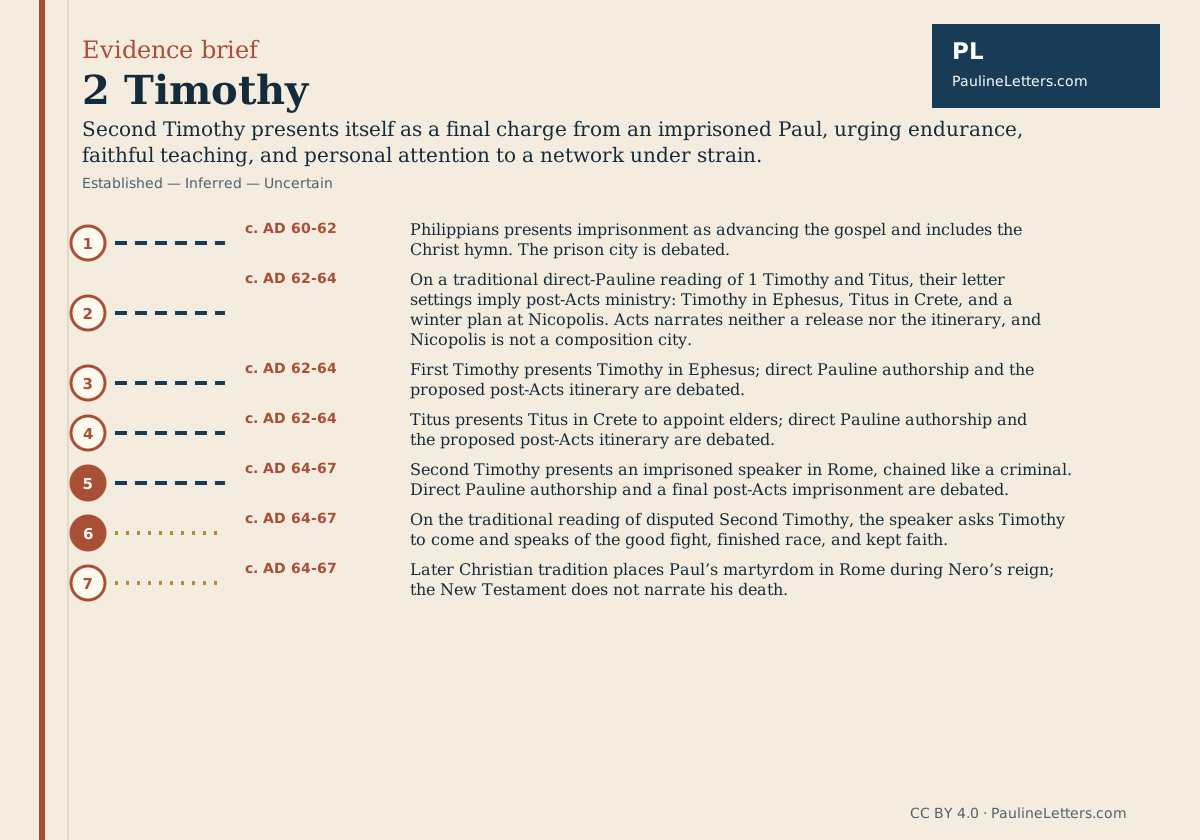
Phil 1:12-26; 2:5-30; 4:10-20 · 1 Tim 1:3; Titus 1:5; 3:12 · 1 Timothy 1-6 · Titus 1-3 · 2 Tim 1:8,15-17; 2:9; 4:6-18 · 2 Tim 4:6-21 · Later church tradition
What remains uncertain
The letter’s narrative setting presents Paul in custody in Rome. Dating it to a final imprisonment around AD 64–67 depends on direct Pauline authorship and a post-Acts sequence.
Acts does not narrate a second Roman imprisonment, and the exact custody location and date are not independently established.
2 Timothy belongs to the traditional Pauline corpus and presents itself as a final prison letter. Its authorship remains disputed with the other Pastoral Letters, although some scholars treat its personal material as preserving authentic Pauline memories or fragments.
A later work preserving Pauline memory: Many scholars regard Second Timothy as a later pastoral work, while some still see its personal material as preserving authentic Pauline memories or fragments. The final Roman setting becomes a literary or remembered frame rather than a securely dated final stage in Paul’s life.
Sources: An Introduction to the New Testament · The Pauline letters · The Acts of the Apostles · Pauline Letters chronology · Paul: A Critical Life
Sources
Phil 1:12-26; 2:5-30; 4:10-20 · 1 Tim 1:3; Titus 1:5; 3:12 · 1 Timothy 1-6 · Titus 1-3 · 2 Tim 1:8,15-17; 2:9; 4:6-18 · 2 Tim 4:6-21 · Later church tradition
- An Introduction to the New Testament
Raymond E. Brown, An Introduction to the New Testament (Doubleday, 1997). Chapter 31, “Pastoral Letter: The Second to Timothy,” “General Analysis of the Message”; Chapter 31, “Pastoral Letter: The Second to Timothy,” “II Timothy and Possibilities about the Pastorals”
- The Pauline letters
Romans through Philemon, World English Bible (public domain).
- The Acts of the Apostles
Acts 7–28, World English Bible (public domain).
- Pauline Letters chronology
The project’s 67-row chronology, cross-referencing Acts and the letters and labeling debated dates.
- Paul: A Critical Life
Jerome Murphy-O’Connor, Paul: A Critical Life (Oxford University Press, 1996). Chapter 1, “The Chronological Framework,” “The Evidence from the Pauline Letters” and “The Evidence from the Acts of the Apostles”
Explore next
Encounter Christ through Scripture, history, and thoughtful learning.
Enter the story