Why did Paul write Philemon, and what is debated about its setting or authorship?
The letter gives no complete narrative of Onesimus’s earlier relationship with Philemon, so later reconstructions must remain restrained.
Acts 27:13-28:10 · Acts 28:11-15 · Acts 28:16-31 · Col 4:7-18; Philemon 10-24 · Eph 1-6; 3:1; 6:20-21 · Phil 1:12-26; 2:5-30; 4:10-20
What remains uncertain
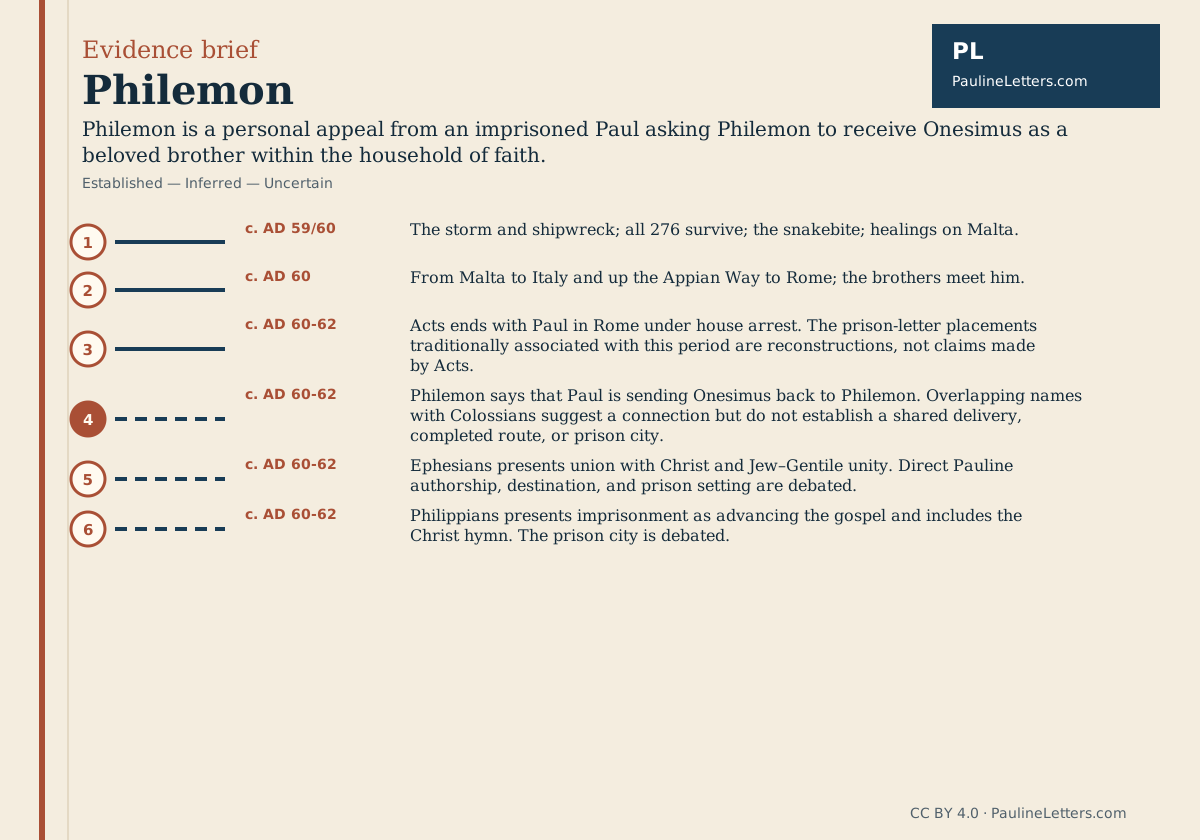
Rome around AD 60–62 is the traditional prison chronology shown here, often linked with Colossians through their overlapping names and closing network.
Brown’s Roman range is AD 61–63; Ephesus and Caesarea have also been proposed, and the letter does not name the prison city.
Philemon is widely regarded as an undisputed Pauline letter. Paul writes as a prisoner about Onesimus to Philemon and colleagues. Rome is the traditional prison setting, though Ephesus and Caesarea have also been proposed.
An Ephesian or Caesarean imprisonment: Some scholars propose Ephesus or Caesarea rather than Rome for the imprisonment behind Philemon and its related correspondence. The travel distance, date, and sequence of the prison letters shift, but the letter’s appeal for Onesimus remains the same.
Sources: An Introduction to the New Testament · The Pauline letters · The Acts of the Apostles · Pauline Letters chronology · Paul: A Critical Life
Sources
Acts 27:13-28:10 · Acts 28:11-15 · Acts 28:16-31 · Col 4:7-18; Philemon 10-24 · Eph 1-6; 3:1; 6:20-21 · Phil 1:12-26; 2:5-30; 4:10-20
- An Introduction to the New Testament
Raymond E. Brown, An Introduction to the New Testament (Doubleday, 1997). Chapter 21, “Letter to Philemon,” “General Analysis of the Message”; Chapter 21, “Letter to Philemon,” “From Where and When?”; Chapter 21, “Letter to Philemon,” “The Background”
- The Pauline letters
Romans through Philemon, World English Bible (public domain).
- The Acts of the Apostles
Acts 7–28, World English Bible (public domain).
- Pauline Letters chronology
The project’s 67-row chronology, cross-referencing Acts and the letters and labeling debated dates.
- Paul: A Critical Life
Jerome Murphy-O’Connor, Paul: A Critical Life (Oxford University Press, 1996). Chapter 1, “The Chronological Framework,” “The Evidence from the Pauline Letters” and “The Evidence from the Acts of the Apostles”
Explore next
Encounter Christ through Scripture, history, and thoughtful learning.
Enter the story