Why does Paul ask the Philippians to honor Epaphroditus?
Epaphroditus brought the Philippians’ support to Paul and nearly died while serving. Paul sends him back with public commendation. He is a different person from Epaphras, the coworker associated with Colossae.
Philippians 2:25 · Philippians 4:14-18 · Philippians 2:26-28 · Philippians 2:5-11 · Philippians 2:29-30 · Colossians 1:7
A community’s gift in a person’s hands
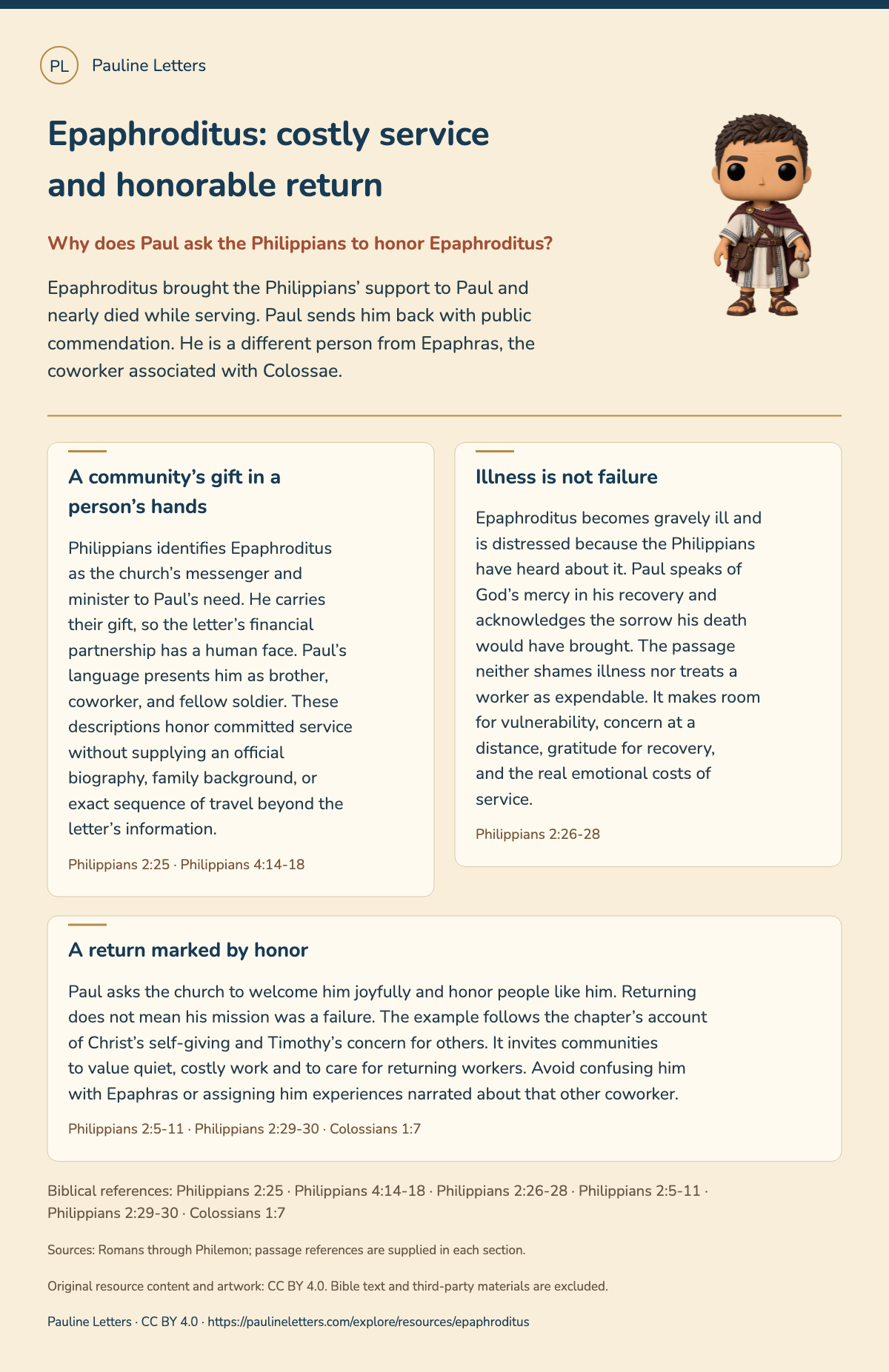
Philippians identifies Epaphroditus as the church’s messenger and minister to Paul’s need. He carries their gift, so the letter’s financial partnership has a human face. Paul’s language presents him as brother, coworker, and fellow soldier. These descriptions honor committed service without supplying an official biography, family background, or exact sequence of travel beyond the letter’s information.
Philippians 2:25 · Philippians 4:14-18
Sources: The Pauline letters
Illness is not failure
Epaphroditus becomes gravely ill and is distressed because the Philippians have heard about it. Paul speaks of God’s mercy in his recovery and acknowledges the sorrow his death would have brought. The passage neither shames illness nor treats a worker as expendable. It makes room for vulnerability, concern at a distance, gratitude for recovery, and the real emotional costs of service.
Philippians 2:26-28
Sources: The Pauline letters
A return marked by honor
Paul asks the church to welcome him joyfully and honor people like him. Returning does not mean his mission was a failure. The example follows the chapter’s account of Christ’s self-giving and Timothy’s concern for others. It invites communities to value quiet, costly work and to care for returning workers. Avoid confusing him with Epaphras or assigning him experiences narrated about that other coworker.
Philippians 2:5-11 · Philippians 2:29-30 · Colossians 1:7
Sources: The Pauline letters
Sources
Philippians 2:25 · Philippians 4:14-18 · Philippians 2:26-28 · Philippians 2:5-11 · Philippians 2:29-30 · Colossians 1:7
- The Pauline letters
Romans through Philemon; passage references are supplied in each section.
Explore next
Encounter Christ through Scripture, history, and thoughtful learning.
Enter the story