Why did Paul write 1 Thessalonians, and what is debated about its setting or authorship?
The letter gives a vivid pastoral snapshot but not a complete account of every Thessalonian question.
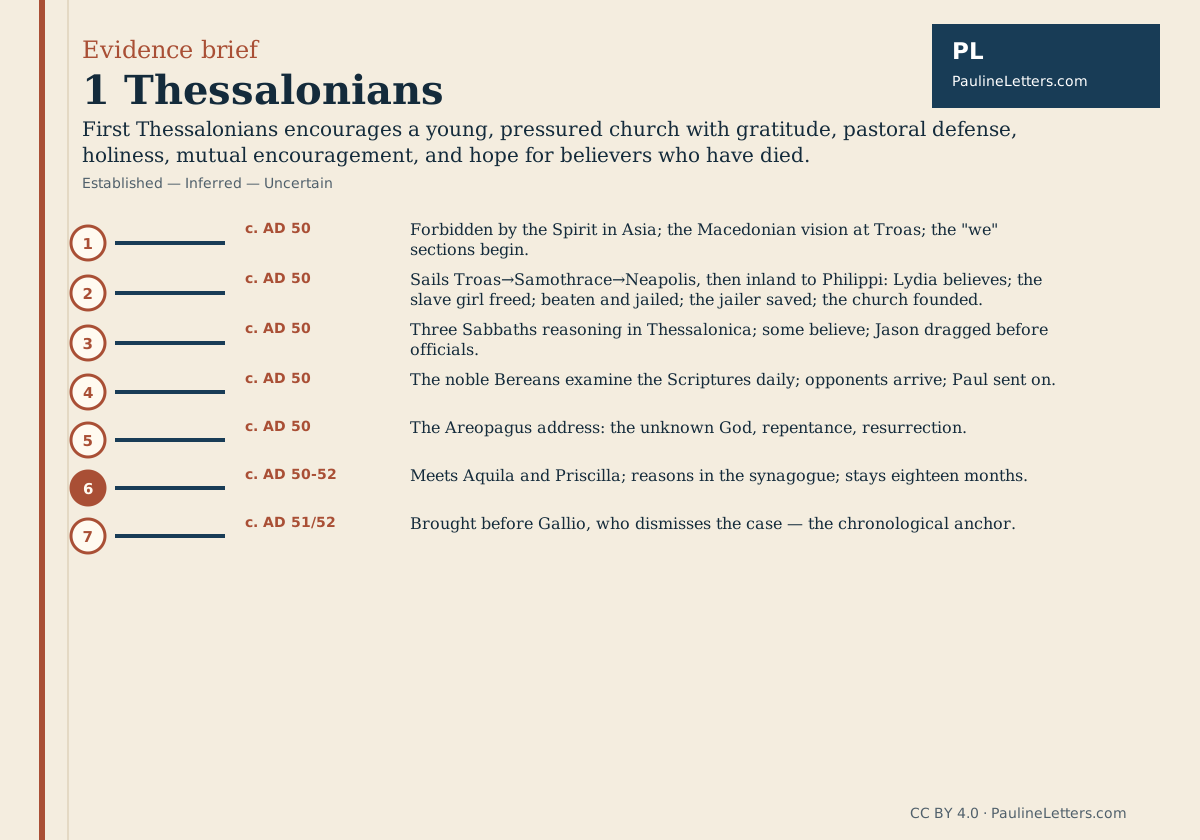
Acts 16:6-10 · Acts 16:11-40; Phil 1:5 · Acts 17:1-9; 1 Thess 1-3 · Acts 17:10-15 · Acts 17:16-34 · Acts 18:1-11; 1 Thess 3:1-6 · Acts 18:12-17
What remains uncertain
Corinth around AD 50–51 is a strong reconstruction, after Timothy returned with news from Thessalonica during the second journey.
The exact sequence of Athens, Corinth, and Timothy’s movements is reconstructed from Acts and the letter.
1 Thessalonians is widely regarded as an undisputed Pauline letter and is often considered the earliest surviving letter of Paul, written from Corinth around AD 50–51.
A nearby Corinthian date: Some chronologies place the letter slightly earlier or later during Paul’s Corinthian stay while retaining the same second-journey setting. The exact year changes modestly, but the letter remains among the earliest surviving Pauline correspondence.
Sources: An Introduction to the New Testament · The Pauline letters · The Acts of the Apostles · Pauline Letters chronology · Paul: A Critical Life
Sources
Acts 16:6-10 · Acts 16:11-40; Phil 1:5 · Acts 17:1-9; 1 Thess 1-3 · Acts 17:10-15 · Acts 17:16-34 · Acts 18:1-11; 1 Thess 3:1-6 · Acts 18:12-17
- An Introduction to the New Testament
Raymond E. Brown, An Introduction to the New Testament (Doubleday, 1997). Chapter 18, “First Letter to the Thessalonians,” “General Analysis of the Message”; Chapter 18, “First Letter to the Thessalonians,” “Summary of Basic Information”: “DATE” and “AUTHENTICITY”; Chapter 18, “First Letter to the Thessalonians,” “The Background”
- The Pauline letters
Romans through Philemon, World English Bible (public domain).
- The Acts of the Apostles
Acts 7–28, World English Bible (public domain).
- Pauline Letters chronology
The project’s 67-row chronology, cross-referencing Acts and the letters and labeling debated dates.
- Paul: A Critical Life
Jerome Murphy-O’Connor, Paul: A Critical Life (Oxford University Press, 1996). Chapter 1, “The Chronological Framework,” “The Evidence from the Pauline Letters” and “The Evidence from the Acts of the Apostles”
Explore next
Encounter Christ through Scripture, history, and thoughtful learning.
Enter the story