Pauline Letters · Evidence-led guide
Manuscripts of Paul’s letters
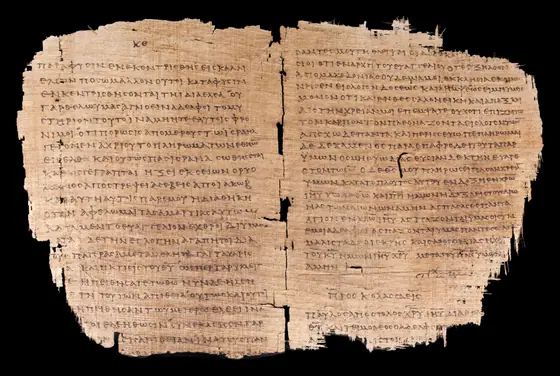
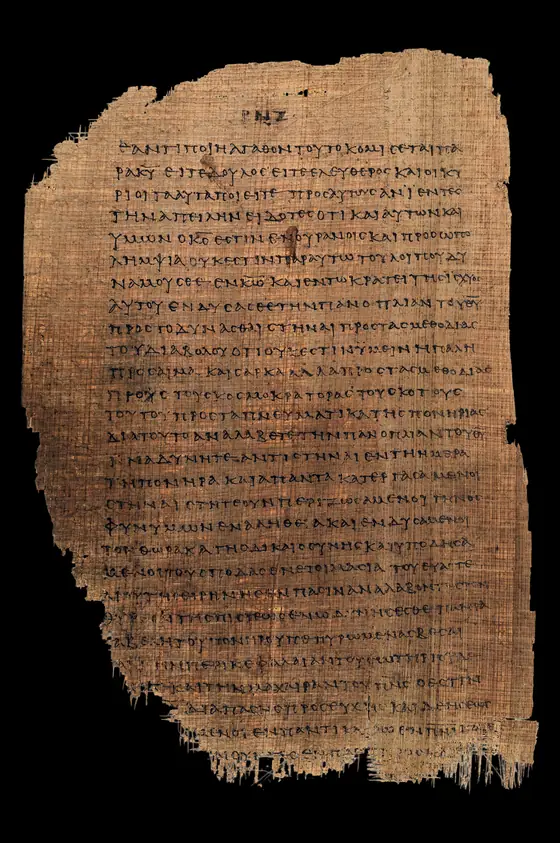
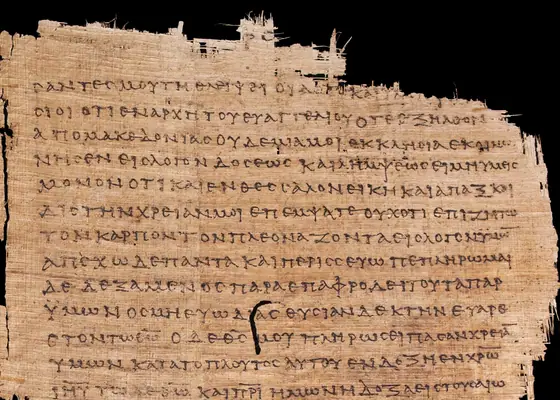
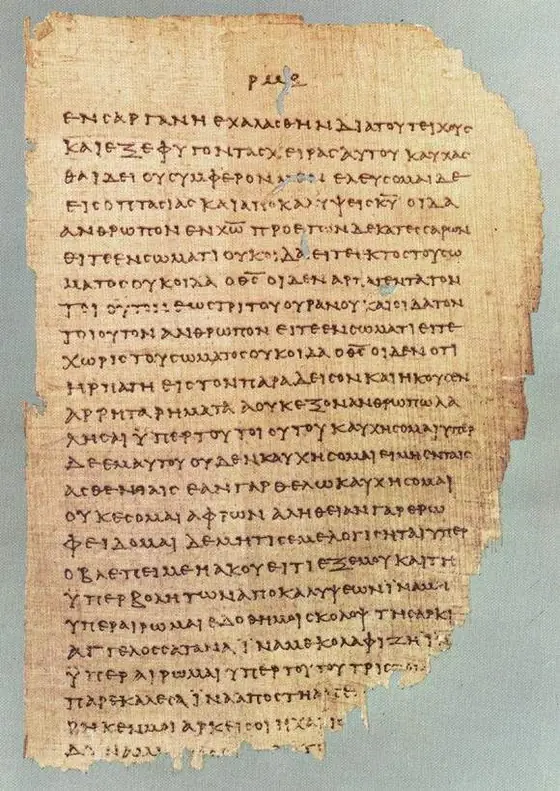
Every letter here survives only as a copy. The oldest of them, Papyrus 46, was made around AD 200 — early enough to show these letters already travelled together as a collection, and no evidence at all of who wrote them.
Reader question
How old are the oldest copies of Paul’s letters, and what do they actually prove?
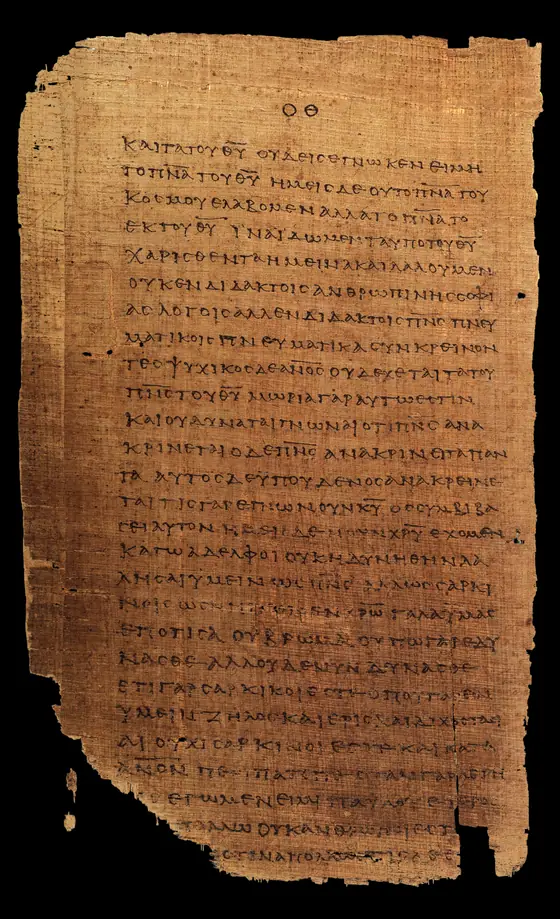
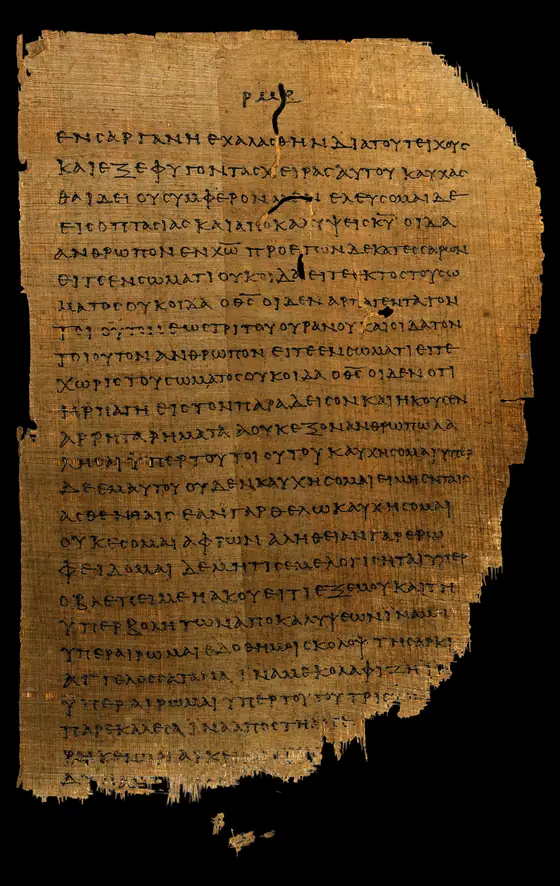
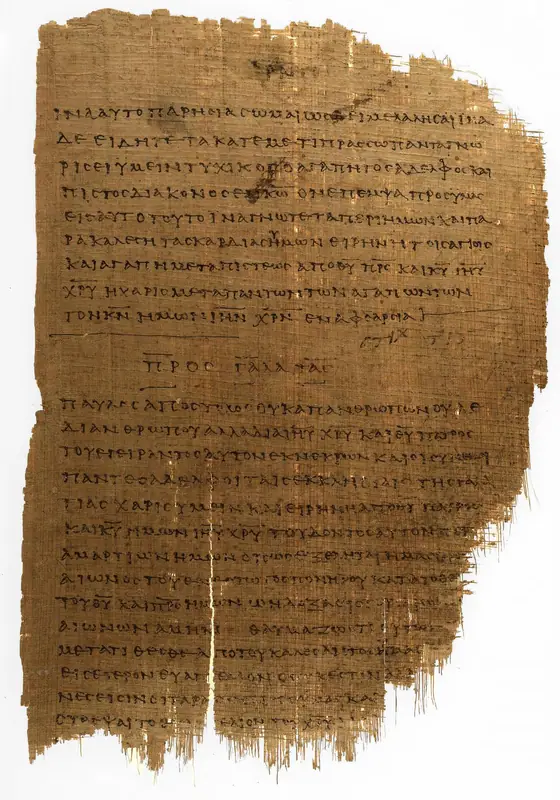
The oldest substantial copy of the Pauline letter collection is Papyrus 46, made around AD 200—roughly a century and a half after the letters’ first-century composition. Codex Sinaiticus, a fourth-century Bible, carries others. Both prove that the texts existed and were being copied and circulated by then; neither identifies who composed a disputed letter.
Witnesses shown in the project

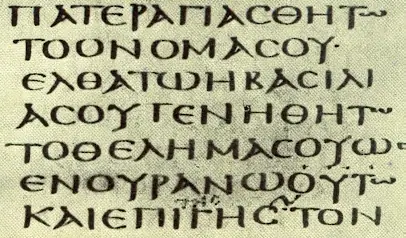
_fol._79v_1_Cor_2,_11%E2%80%933,_5.jpg)
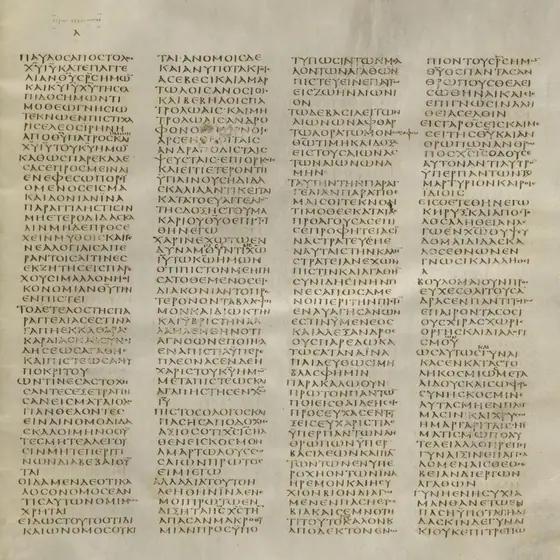
_fol._142r_-_2_Corinthians_11,33-12,9.jpg)

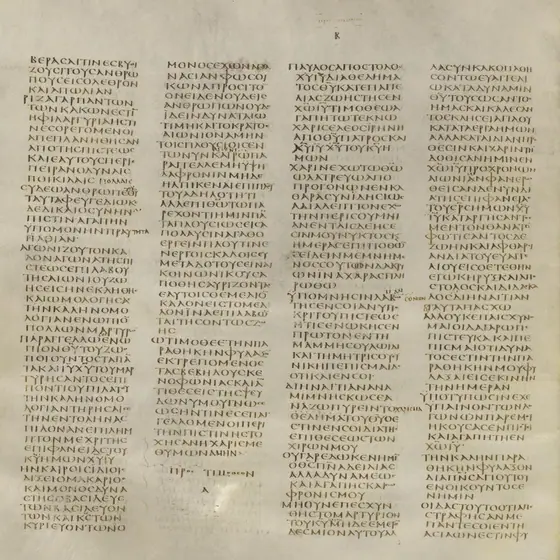
_fol._157v_Eph_6,_8%E2%80%9318.jpg)




What survives, and how early
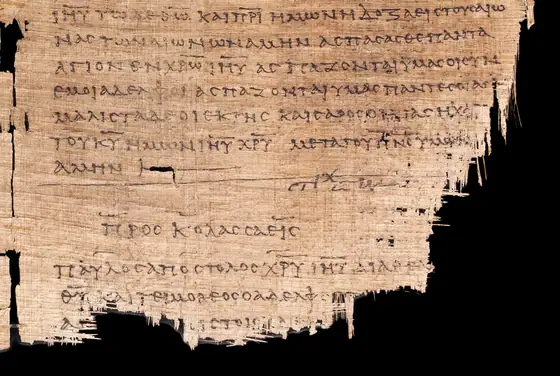
The images here are photographs of real surviving copies rather than reconstructions. Papyrus 46, held mainly at the Chester Beatty Library, preserves a collection of Paul’s letters from around AD 200. Codex Sinaiticus, a fourth-century Bible, preserves others. Both are witnesses to the text: they show what was being copied and circulated, and how early.
They do not prove authorship, and they do not prove a date of composition. A second-century copy of Colossians establishes that Colossians existed and travelled inside a Pauline collection by then. It says nothing about who held the pen. Keeping that distinction visible matters more than the photographs do.
Why some letters share an image
Three letters here share one photograph of Codex Sinaiticus, and the card says so rather than hiding it. No per-letter page for those three is available from the public-domain source this project uses, and producing three different generic pages would imply evidence that does not exist.
The shared image is labelled as a shared witness, which turns an apparent duplicate into something the reader learns from: these letters survive together, in one codex, copied by the same hands. Where a genuine per-letter leaf does exist, as with the Papyrus 46 bifolio carrying the end of Philippians and the opening of Colossians, the crop shows that leaf and the caption names what is on it.
Common questions
How old is the oldest copy of Paul’s letters?
Papyrus 46 is dated to about AD 200, give or take a few decades, and is held mainly at the Chester Beatty Library in Dublin with further leaves at the University of Michigan. It is a codex of Paul’s letters gathered together, which is itself informative: by AD 200 these letters were already travelling as a collection.
Does an early manuscript prove Paul wrote the letter?
No, and this is the distinction worth holding. A second-century copy of Colossians establishes that Colossians existed and circulated inside a Pauline collection by then. It says nothing about who composed it. Manuscripts are evidence of transmission; authorship is argued from language, situation and external testimony instead.
Why do three letters share one photograph?
Because no per-letter page for those three exists in the public-domain source this project uses, and producing three different generic images would imply evidence that does not exist. The card says the image is shared, which turns an apparent duplicate into something the reader learns from: these letters survive together, in one codex, copied by the same hands.
What is P46 exactly?
P46 is the standard siglum for Papyrus 46, a papyrus codex of Paul’s letters copied around AD 200. It is the earliest substantial witness to the Pauline corpus, and its surviving leaves carry Romans, Hebrews, First and Second Corinthians, Galatians, Ephesians, Philippians and Colossians, plus a damaged portion of First Thessalonians, with losses at both ends.
Bibliography and sources
- Acts 7–28, World English Bible (public domain). View source
- Romans through Philemon, World English Bible (public domain). View source
- The project’s 67-row chronology, cross-referencing Acts and the letters and labeling debated dates.
Cite this page
Thomas Diong. “Manuscripts of Paul’s letters.” Pauline Letters. Updated 2026-09-03. https://paulineletters.com/explore/manuscripts
BibTeX
@online{paulineletters-manuscripts,
  author = {Diong, Thomas},
  title = {Manuscripts of Paul’s letters},
  organization = {Pauline Letters},
  date = {2026-09-03},
  url = {https://paulineletters.com/explore/manuscripts},
  langid = {en}
}
RIS
TY  - ELEC
TI  - Manuscripts of Paul’s letters
AU  - Diong, Thomas
T2  - Pauline Letters
DA  - 2026/09/03
UR  - https://paulineletters.com/explore/manuscripts
LA  - en
ER  -